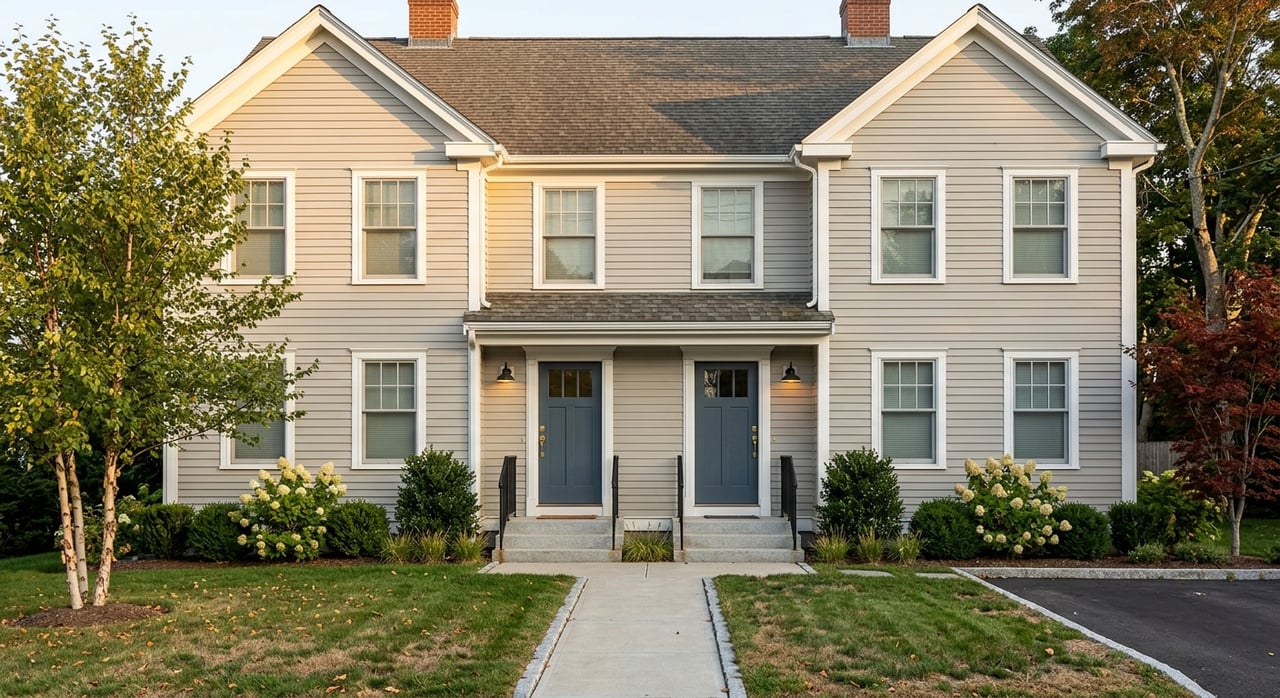
If you are thinking about buying a rental property in Natick, the big question is simple: will the numbers and demand hold up over time? In a Greater Boston suburb with strong commuter access, a broad job base, and rents that sit above many Massachusetts markets, Natick gets attention from investors for good reason. The key is knowing what type of rental performs best, what demand drivers matter most, and where you need to stay conservative. Let’s dive in.
Why Natick Stands Out
Natick sits in a higher-income, transit-oriented part of MetroWest, which helps explain why it stays on many investors’ radar. According to U.S. Census QuickFacts for Natick, the town has a median household income of $138,538, median gross rent of $2,134, and owner-occupied housing at 68.2%.
Natick also plays an important role in the local housing market. The town’s 2021 Housing Production Plan notes that Natick has more rental housing than many nearby communities, with a reported rental vacancy rate of 4% at that time. For investors, that points to an established rental base rather than a market built on just a few isolated apartment projects.
Natick Rental Stock at a Glance
Before you underwrite a deal, it helps to understand what kinds of housing exist in town. Natick’s housing stock is about 60% detached single-family, 35% multifamily, and 5% other housing types, according to the town’s Housing Production Plan. Much of that housing was built before 1960, which can create value-add potential but also raises the odds of capital improvements.
The same town plan says the most available rental option in Natick is a two-bedroom unit. That matters because it gives you a clue about product-market fit. If you are looking at condos, small multifamily properties, or apartment-style units, one- and two-bedroom layouts appear to align best with the local rental mix.
Natick also has a meaningful professionally managed apartment presence. The town’s FY2026 classification materials list properties such as Avalon Natick, Natick Village, Cloverleaf Apartments, and Modera Natick among major residential taxpayers, showing that the market includes both institutional operators and smaller private owners.
What Rents Look Like Today
Natick rents are not cheap by suburban standards. Recent public data sources measure the market a little differently, but they point in the same direction: Natick sits above many Massachusetts suburbs and below Boston and Cambridge.
RentCafe’s Natick market data shows an average apartment rent of $2,674 as of March 2026, with 47% of rentals priced between $2,001 and $2,500. For another view, Zillow’s Natick rental market trends show an average rent of $2,500 as of April 2026.
A practical way to think about current asking rents is by broad ranges:
- Studio: about $1,850 to $2,500
- 1-bedroom: about $2,100 to $2,900
- 2-bedroom: about $2,600 to $3,600
- 3-bedroom: about $3,800 to $4,100
- Houses and larger single-family rentals: roughly $2,500 to $4,200, with wider variation depending on size and condition
Those ranges suggest that smaller units may offer the clearest path to consistent demand, while larger homes can command stronger top-line rent but may be more sensitive to price, condition, and location.
How Natick Compares Regionally
Natick fits into an interesting middle ground within eastern Massachusetts. According to RentCafe, average rent is $2,674 in Natick, compared with $3,638 in Boston, $3,611 in Cambridge, and $2,011 in Worcester.
For investors, that gap matters. Natick may appeal to renters who want access to Greater Boston but are looking for a different price point than Boston or Cambridge. That relative position can help support demand, especially when transit and road access are part of the value story.
What Drives Tenant Demand in Natick
Demand is rarely about one factor alone. In Natick, the strongest rental demand appears tied to a mix of commuter convenience, employment access, and everyday amenities.
The town’s Housing Production Plan says Natick’s market is supported by proximity to Boston, public transportation, the employment base, and housing that is somewhat less expensive than many surrounding towns. That same plan also found strong growth in renter householders among ages 25 to 34, which supports the case for smaller units in accessible locations.
Transit is a major part of the picture. Natick is served by the MBTA Framingham/Worcester Commuter Rail Line, with stops at Natick Center and West Natick. The town also highlights shuttle links to MathWorks campuses and Natick Army Labs, along with access to Route 9, I-90, Route 128, and I-495 corridors.
Natick’s local economic base adds another layer of stability. The town’s economic development materials identify professional and technical services, healthcare, education, and retail services as primary industries. The same source points to Natick Center, the Natick Mall and Golden Triangle area, Morse Institute Library, TCAN, parks and trails, and Lake Cochituate as local amenities that add to the town’s appeal.
Best Rental Types for Investors
If you are choosing between asset types, Natick appears best suited to a few specific plays. Based on the town’s housing profile and current rent patterns, one- and two-bedroom units stand out as the clearest fit for recurring tenant demand.
That does not mean larger units cannot work. It does mean you should be more selective when analyzing three-bedroom units or single-family rentals, because they can come with higher acquisition costs, wider rent spreads, and potentially more maintenance exposure.
In practical terms, these property types may deserve the closest look:
- Small multifamily properties with updated one- and two-bedroom units
- Condos or apartment-style units near commuter rail access
- Older housing stock with realistic renovation upside
- Transit-oriented locations that appeal to commuters and working professionals
The Cost Side of the Equation
Strong rents do not automatically mean easy cash flow. Natick’s Census QuickFacts show a median owner-occupied home value of $821,000, which signals a relatively high barrier to entry for many small investors.
That is why conservative underwriting matters here. High acquisition costs can narrow margins, and older housing stock can introduce renovation needs that are easy to underestimate. If you are looking at a pre-1960 property, your budget should account for improvements, turnover costs, and ongoing maintenance rather than assuming a light cosmetic update will cover everything.
Policy Changes to Watch
Natick is also a market where local policy may shape future rental supply. The town has adopted Accessory Dwelling Unit rules, and the same page notes that ADUs may be rented. It also states that Natick cannot require off-street parking for ADUs within half a mile of a commuter rail station.
In addition, town zoning materials referenced on the ADU page point to MBTA Communities amendments around Natick Center to meet state multifamily housing requirements near commuter rail. For investors, this does not necessarily mean immediate oversupply. It does suggest that small-unit and transit-oriented inventory could gradually increase over time, which makes location, condition, and unit layout even more important.
Smart Underwriting for Natick Deals
If you are evaluating a Natick rental purchase, a few principles can help you stay disciplined:
- Prioritize durable demand. Look closely at one- and two-bedroom units, especially near transit and major commuter routes.
- Underwrite renovations carefully. Much of Natick’s housing stock predates 1960, so repair and upgrade costs can add up fast.
- Use rent ranges, not best-case rents. Public snapshots vary, so it is smarter to model conservative asking rents within a realistic band.
- Watch policy and supply trends. ADUs and transit-area zoning changes may affect competition over time.
- Match the asset to your strategy. Natick may fit a long-term stability play better than a high-yield, low-entry-cost strategy.
Bottom Line for Natick Investors
Natick offers many of the traits investors want in a Greater Boston suburb: commuter rail access, road connectivity, a broad employment base, and rent levels that are well above many Massachusetts markets. At the same time, the town’s higher acquisition costs and older housing stock mean you need to stay selective and realistic.
For many buyers, the strongest opportunities may be smaller multifamily properties, condos, or apartment-style units that line up with the town’s demand for one- and two-bedroom rentals. If you want to invest in Natick, the best approach is usually not chasing the highest headline rent. It is buying the right asset, in the right location, with numbers that still work under a conservative plan.
If you want help analyzing rental opportunities in Natick or comparing them with other Greater Boston and Central Massachusetts markets, connect with Persa Konomi. You will get clear guidance, data-backed insight, and a practical strategy built around your investment goals.
FAQs
What makes Natick attractive to rental property investors?
- Natick offers strong commuter access, a broad employment base, above-average suburban rents, and an established rental market supported by both multifamily properties and smaller private landlords.
What rental unit types are most common in Natick?
- The town’s housing plan says two-bedroom units are the most available rental option, and current market data also shows one- and two-bedroom units as core rental products.
What are average rents for apartments in Natick?
- Recent public data places average apartment rent around $2,500 to $2,674, depending on the source and the type of rentals included in the sample.
What should investors watch when buying older rental property in Natick?
- Much of Natick’s housing stock was built before 1960, so you should budget carefully for renovations, maintenance, and capital improvements before finalizing your underwriting.
How does transit affect rental demand in Natick?
- Transit is a major demand driver because Natick has commuter rail service at Natick Center and West Natick, plus access to major road corridors that support commuting across the region.
Are zoning and ADU rules important for Natick rental investors?
- Yes. Natick’s ADU rules and transit-area multifamily zoning changes could influence future rental supply, especially for smaller units near commuter rail stops.