If you are thinking about buying a rental property in Worcester, it is easy to get pulled in by the list price or projected rent alone. But a smart investment decision comes from looking at the full picture, including local rent trends, operating costs, property type, and city compliance rules. This guide will help you evaluate Worcester rental properties with a clear, practical framework so you can compare opportunities with more confidence. Let’s dive in.
Why Worcester Draws Rental Investors
Worcester has a large renter base, which makes rental housing a major part of the local market. The city’s July 1, 2025 population estimate was 213,862, and 42.8% of housing units were owner-occupied, which means roughly 57.2% of occupied units were renter-occupied.
That renter share matters when you are evaluating demand. The City of Worcester also says there are about 50,000 rental dwellings in the city, which shows just how important rentals are to the local housing landscape.
Worcester also offers a mix of price points and property types. Census QuickFacts reported a median gross rent of $1,487, while Zillow’s average asking rent in Worcester was $2,174 through May 31, 2026. Because those figures use different methods, it is best to treat them as broad reference points rather than direct substitutes.
Start With Worcester Property Types
In Worcester, property type is not a small detail. It affects rent potential, repair costs, parking needs, and even how easy the property may be to operate over time.
Three-deckers and small multifamily
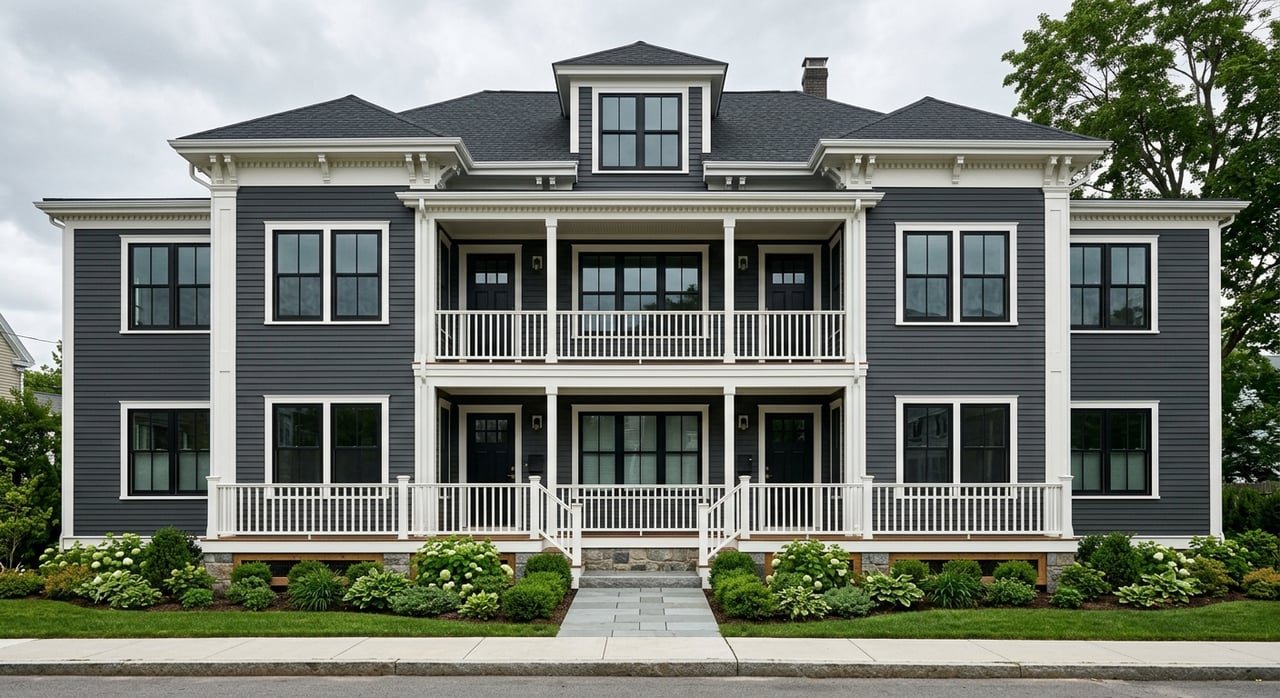
Worcester is well known for its three-deckers, and the city’s design guidelines describe the three-decker as an iconic multifamily building type first built in Worcester. That means triple-deckers and other small multifamily homes are central to the local rental market.
These properties can offer strong unit count relative to lot size, but they often come with older building systems and more ongoing maintenance. When you tour one, pay close attention to roof age, windows, porches, heating systems, and common-area condition.
Two-family and three-family zoning patterns
Worcester’s housing needs assessment shows that two-family homes are allowed by right on 41% of the city’s land area, while three-family homes are allowed by right on 24%. Low-rise multifamily is allowed by right on 25%, and high-rise multifamily on 21%.
This matters because zoning affects what already exists and what could be added in the future. The same assessment notes that by-right multifamily is concentrated in the city’s inner-core areas, which can shape your competition and future supply outlook.
ADU potential
Worcester’s ADU ordinance, adopted in January 2026, allows one accessory dwelling unit per property on lots with one lawfully existing residential dwelling. The ordinance does not require owner occupancy, but it does not allow ADUs to be used as short-term rentals.
If you are evaluating a single-family home as a long-term rental or house-hack opportunity, ADU potential may add value. Still, you should underwrite that upside carefully and confirm feasibility before you count on it.
Evaluate Rent the Right Way
One of the biggest mistakes investors make is using a single citywide rent number for every deal. In Worcester, a better approach is to start with current asking rents and then adjust for unit condition, lease structure, and location.
A renovated unit may support higher rent than an outdated one, even in the same area. A larger unit, off-street parking, or owner-paid utilities can also shift the rent range in meaningful ways.
Worcester’s median household income was $70,102, and the poverty rate was 19.6%. Those figures are useful context when you are thinking about affordability and rent-setting, especially if your business plan depends on aggressive rent growth.
Build a Worcester-Specific Pro Forma
A good rental analysis should separate income, losses, expenses, reserves, and debt service. If you skip that structure, it becomes much harder to see whether a property truly performs.
Income and vacancy
Start with gross scheduled rent based on realistic asking-rent comparisons. Then subtract vacancy and credit loss before you move on to expenses.
Even if a property is fully occupied today, you should still model turnover and nonpayment risk. A deal that only works with perfect collections is usually too fragile.
Property taxes
Worcester’s FY2026 residential property tax rate is $13.28 per $1,000 of assessed value. The commercial rate is $29.06 per $1,000, and mixed-use properties should be modeled carefully because Worcester classifies property by use.
The city bills real estate taxes quarterly. Worcester also applies a 1.5% Community Preservation Act surcharge on annual property tax, with a $100,000 exemption for each taxable residential parcel.
Water and sewer
Utilities can make or break your NOI, especially in multifamily properties where the owner pays certain services. Worcester’s FY2026 water rate is $3.85 per hundred cubic feet, and the sewer rate is $9.49 per hundred cubic feet.
If you are buying a property where water or sewer use is hard to predict, leave yourself room in the underwriting. Older plumbing, more occupants, and deferred maintenance can all push utility costs higher than expected.
Registration, inspections, and reserves
Worcester’s rental registry requires annual registration. The city lists fees of $15 per unit for registration, $5 per unit for annual renewal, and $50 per unit for the periodic inspection program.
Those costs may not seem huge on their own, but they belong in your operating budget. Worcester also notes that more than 6,500 properties are subject to inspection, so compliance is a real part of owning rentals here.
For older Worcester multifamily buildings, keep capital reserves realistic. The local housing stock includes many older properties, and pre-1978 buildings may create added lead-related costs and other renovation needs.
Check Parking and Site Constraints
Parking deserves more attention than many buyers give it. Worcester requires two off-street spaces per dwelling unit for single-family, two-family, three-family, and multifamily residences.
That standard can affect layout, paving, snow removal, and long-term maintenance costs. It can also shape whether a property is easy to lease in practice, especially if off-street parking is limited or awkward.
Stress-Test Future Supply
A solid Worcester rental analysis should not assume endless rent growth. The city’s Housing Production Plan was adopted in 2025 and approved by the state in 2026, and Worcester’s policy direction points toward future supply growth.
The city’s inclusionary zoning efforts and its 2025 Housing Choice Community designation, which cited 2,133 net new housing units, support that view. For investors, that means it is wise to test your numbers under more conservative rent-growth scenarios.
Focus on Due Diligence Early
A deal can look strong on paper and still become expensive after closing if you miss local compliance issues. In Worcester, due diligence should go beyond the usual review of leases and utility bills.
Inspection requirements
Worcester’s ordinance says non-owner-occupied residential rental units are inspected under the State Sanitary Code at least every five years. Buildings with more than two residential rental units also need a Certificate of Inspection under the State Building Code.
Before you close, you should understand the property’s inspection history and whether any required certificates are current. That can help you avoid surprise costs and rushed repairs later.
Lead law exposure
Massachusetts Lead Law applies to residential property built before 1978. Owners must provide the required lead notifications before a lease is signed.
If a child under six lives in the unit, deleading or lead-safe compliance can become a major operating issue. In Worcester, where many multifamily properties are older, this is an especially important part of your review.
Security deposit handling
Massachusetts security-deposit law is detailed, and owners need systems that support compliance. A deposit is limited to one month’s rent, must be held in a separate interest-bearing account, and requires specific notices and timelines.
For example, the owner must provide a signed statement of condition within 10 days of collection and written bank and account information within 30 days of deposit. The deposit and any interest must be returned within 30 days after move-out.
Fair housing compliance
Massachusetts fair housing law prohibits discrimination based on source of income, familial status, disability, race, color, national origin, religion, sex, sexual orientation, gender identity, age, marital status, veteran or active military status, and genetic information.
If you are building a leasing plan, tenant criteria, or voucher assumptions into your pro forma, those choices should be consistent with state law. Clear, lawful, and consistent processes help protect both your investment and your operations.
Tax status and delinquency
Tax review is another basic but important step. Worcester bills taxes quarterly, and late balances accrue interest.
Unpaid accounts can lead to demand notices, liens, and the tax-title process. Before you buy, confirm the current tax status so you know exactly what you are taking on.
A Simple Worcester Evaluation Checklist
When you compare rental properties in Worcester, keep your process consistent. A simple checklist can help you spot whether a deal is truly attractive or just looks good at first glance.
- Verify realistic market rent based on current asking-rent comparisons
- Separate gross rent, vacancy, expenses, reserves, and debt service
- Confirm FY2026 tax assumptions and CPA surcharge treatment
- Estimate water and sewer costs based on who pays and likely usage
- Review rental registry, inspection, and certificate requirements
- Check parking layout against Worcester’s off-street parking standards
- Evaluate lead-law exposure for any pre-1978 building
- Review security-deposit procedures if the property is occupied
- Confirm tax balances and any lien concerns
- Stress-test rent growth against future housing supply
Why Local Guidance Matters
Worcester is not a market where you want to rely on generic rental rules. The mix of triple-deckers, older housing stock, local inspection requirements, utility costs, and evolving housing policy means details matter.
If you want to buy well, you need more than a cap rate headline. You need a local view of how the property fits Worcester’s rental landscape, what it may cost to operate, and where the real risks and opportunities are.
If you are considering a Worcester rental property and want a clear, data-informed approach, Persa Konomi can help you evaluate opportunities across Worcester and Central Massachusetts with local insight and organized guidance.
FAQs
How do you evaluate rent for a Worcester rental property?
- Start with current Worcester asking-rent comparisons, then adjust for unit condition, lease terms, location, parking, and who pays utilities.
What property taxes should you budget for Worcester rentals?
- Worcester’s FY2026 residential tax rate is $13.28 per $1,000 of assessed value, and residential parcels also include a 1.5% CPA surcharge with a $100,000 exemption.
What Worcester fees apply to rental properties?
- Worcester requires annual rental registration, with listed fees of $15 per unit for registration, $5 per unit for annual renewal, and $50 per unit for periodic inspection.
What inspections do Worcester rental properties need?
- Non-owner-occupied residential rental units are inspected under the State Sanitary Code at least every five years, and buildings with more than two rental units need a Certificate of Inspection under the State Building Code.
Why are three-deckers important in the Worcester rental market?
- Worcester identifies the three-decker as an iconic local multifamily building type, and small multifamily properties are a major part of the city’s rental housing stock.
What should you know about older Worcester rental properties?
- Many older properties need stronger capital reserves, and pre-1978 buildings may trigger lead-notification and lead-compliance responsibilities under Massachusetts law.