Wondering if you can get an urban lifestyle without paying Boston-level condo prices? Downtown Worcester makes a strong case. If you want a home that puts dining, events, transit, and everyday convenience close by, condo living here may offer the balance you are looking for. Let’s take a closer look at what downtown Worcester condo living really offers.
Why Downtown Worcester Stands Out
Downtown Worcester is not a huge, spread-out city center. It is a compact district anchored by City Hall and the Worcester Common, with more than 100 properties across roughly 78 acres. That smaller footprint matters because it helps create a lifestyle built around proximity, walkability, and easy access to amenities.
For many condo buyers, the appeal is not just the unit itself. It is the ability to step outside and be close to restaurants, performance venues, public art, and seasonal events. Downtown Worcester offers that kind of connected experience in a way that feels active year-round.
Urban Conveniences Close to Home
Downtown Worcester brings together a mix of culture, dining, and public gathering spaces in one central area. Local highlights include The Hanover Theatre & Conservatory, DCU Center, Jean McDonough Arts Center, Mercantile Center, and the Worcester Common. That means your plans for the day or evening may be just a short walk away.
The Worcester Common adds another layer to downtown living. The city uses this open space for civic and recreational activities throughout the year. In winter, the Oval becomes an ice rink, and in summer, the Common Oval hosts the Out to Lunch Festival and Farmers’ Market series.
If you like having entertainment options nearby, the broader downtown and Canal District area adds Polar Park to the mix. The ballpark seats 9,508 people and hosts WooSox games, concerts, festivals, and other events. For condo owners, that extends the entertainment zone beyond the immediate downtown core without making you rely on a long drive.
Transit Access That Supports Daily Life
One of downtown Worcester’s biggest advantages is Union Station. The city describes it as an intermodal hub with Amtrak, MBTA commuter rail service to Boston, taxi service, and both intra-city and inter-city bus service. The WRTA hub sits next door, making downtown one of the most connected parts of Worcester.
This matters if you commute, travel regularly, or simply want flexibility. A downtown condo can make it easier to use rail or bus service as part of your routine instead of depending on a car for every trip. That convenience is one of the biggest differences between downtown condo living and more car-dependent areas.
Union Station has also seen major accessibility improvements. City materials say the project began in fall 2021 and was scheduled for completion in spring 2025, adding a new high-level center platform, elevators, stairways, and a pedestrian bridge. Those upgrades support a more practical transit-oriented lifestyle for residents.
Parking and Car-Light Living
Even if you want to walk more, parking still matters. Downtown Worcester offers a mix of municipal garages, lots, and on-street pay-by-plate parking. The city notes that garages and lots are within short walking distance of destinations like Union Station, DCU Center, Hanover Theatre, Polar Park, the Public Library, and the Canal District.
That setup can be useful if you own one car, have guests visiting, or want nearby parking without needing a large private driveway. The 500-space garage behind Union Station adds another layer of convenience. The city also provides free overnight garage parking for residents during a declared winter parking ban.
For buyers comparing downtown condos with homes in surrounding towns, this is a different kind of convenience. You may trade private parking space or a yard for easier access to destinations and services close by.
A More Walkable Downtown Experience
Downtown Worcester has also benefited from streetscape improvements that support walking and biking. The city’s Main Street Reimagined work added widened sidewalks, dedicated bike lanes, refreshed lighting, and new crosswalks. The stated goal was to improve walkability, public safety, and vibrancy.
For condo buyers, those changes help shape the day-to-day feel of the neighborhood. A walkable district is about more than distance on a map. It is about whether the streets feel easier and more comfortable to use as part of daily life.
What Downtown Condos Tend to Look Like
Downtown Worcester condo inventory tends to reflect the city’s mix of older buildings and redevelopment efforts. The city’s Downtown Urban Revitalization Plan identifies about 214 residential condominium units in the downtown urban renewal area and emphasizes rehabilitation of existing units, façade improvements, and new housing in underused structures.
That means your options may include adaptive reuse buildings, mixed-use developments, and newer infill projects. In practical terms, downtown condo buyers are often choosing between homes with historic character and homes with more contemporary layouts or finishes. The overall housing pattern is different from detached-home living in surrounding neighborhoods.
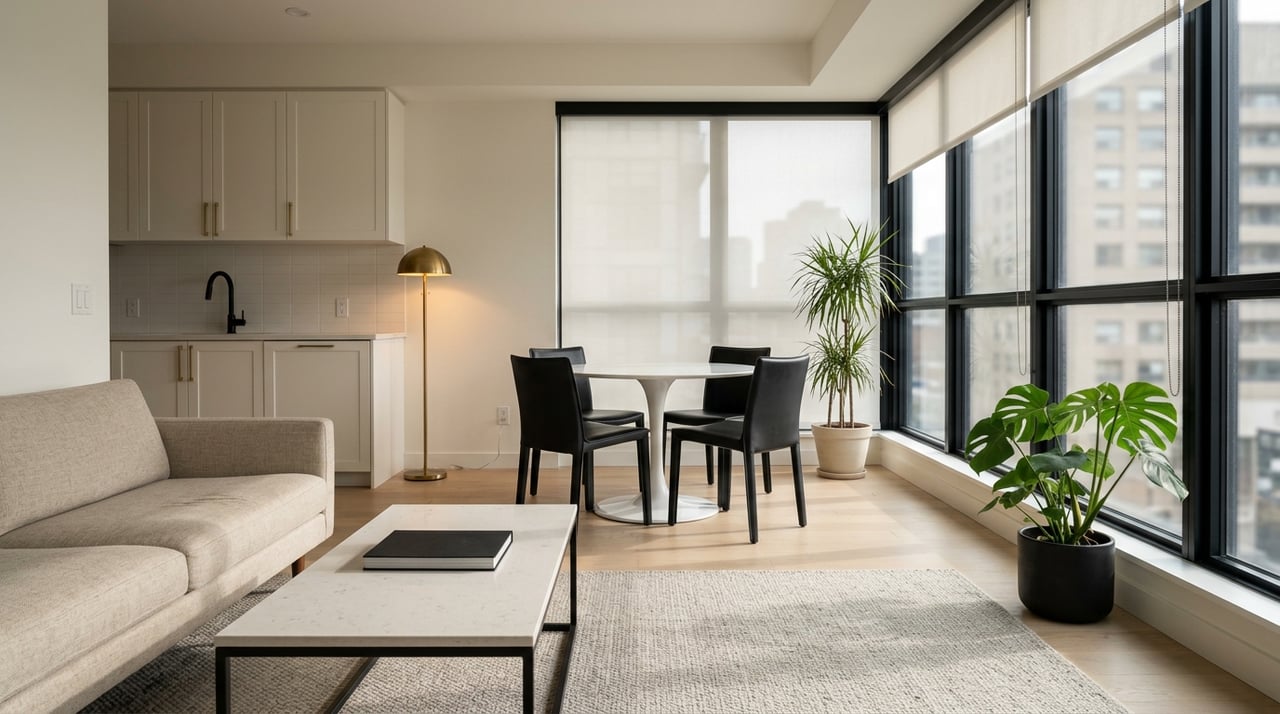
Market examples from current Worcester condo listings show features such as open floor plans, brick accents, exposed brick, in-unit laundry, hardwood flooring, cathedral ceilings, and penthouse-style layouts. Not every downtown condo will have these features, but they offer a useful snapshot of the finishes and design elements buyers may see.
Cost Compared With Boston
For buyers who want an urban setting but are priced out of Boston, Worcester often enters the conversation quickly. Current listing data shows Worcester condos at a median listing price of $250,000 across 30 homes, while Boston condos are listed at a median of $815,000 across 1,530 homes. That is a listing-price snapshot, not a full neighborhood-by-neighborhood analysis, but it helps illustrate the pricing gap.
For some buyers, that gap is the headline. You may be able to pursue a city-style condo lifestyle with access to transit, dining, and entertainment while staying in a very different price range than Boston. That does not mean every condo is inexpensive, but it does explain why Worcester continues to attract attention from local buyers and people relocating within Massachusetts.
The Tradeoffs of Condo Ownership
Condo living can simplify some parts of ownership, but it also comes with its own structure. In Massachusetts, condos are privately owned and governed through documents such as the master deed, deed, bylaws, and Chapter 183A. These documents help define owner rights, common area responsibilities, and building rules.
One major difference from a single-family home is the role of condo fees. These fees are usually paid directly to the association and can range from a few hundred dollars to more than $1,000 per month. What you receive in return depends on the building, so reviewing those details carefully is an important part of the buying process.
Condo documents also often address maintenance, insurance, reserve funds, assessments, and rules and regulations. Insurance can be more layered as well, since association fees may include master insurance for common areas while you still need coverage for the interior of your unit and personal property. If you are considering a downtown condo, these details matter just as much as location and layout.
Questions to Ask Before You Buy
If you are thinking about a condo in downtown Worcester, it helps to look beyond the photos. A well-located condo can be a great fit, but the right choice depends on how the building operates and how it supports your daily routine.
Here are a few smart questions to ask:
- What does the condo fee cover?
- Are there any upcoming assessments?
- Is parking assigned, deeded, leased, or nearby in a municipal garage?
- Is the building an adaptive reuse project or newer construction?
- How far is the condo from Union Station, restaurants, and downtown event spaces on foot?
- What are the building rules around pets, rentals, move-ins, or renovations?
- What type of insurance is covered by the association, and what will you need for your own unit?
These questions can help you compare options more clearly. They also give you a better sense of the full ownership picture, not just the purchase price.
Is Downtown Worcester Condo Living Right for You?
Downtown Worcester condo living tends to work best if you value access, efficiency, and a connected urban setting. You may appreciate being close to Union Station, cultural venues, public events, and dining options while having less exterior maintenance than a single-family home. That combination can be especially appealing if you are relocating, downsizing, buying your first property, or looking for a more city-oriented lifestyle in Central Massachusetts.
If your priority is more private outdoor space, fewer shared rules, or greater control over the property itself, a single-family home in a surrounding town may be a better fit. The key is matching the ownership style to your daily habits and long-term goals. When you look at downtown Worcester through that lens, the condo story becomes much clearer.
If you are exploring condos in Worcester or comparing downtown living with other Central Massachusetts options, working with a local guide can help you sort through building details, pricing, and lifestyle fit with more confidence. Connect with Persa Konomi to start your search with clear, organized guidance.
FAQs
What is downtown Worcester condo living like for daily convenience?
- Downtown Worcester condo living centers on close access to restaurants, venues, the Worcester Common, Union Station, and seasonal events in a compact area.
What transportation options are available near downtown Worcester condos?
- Downtown Worcester offers access to Amtrak, MBTA commuter rail to Boston, WRTA bus service, taxi service, and nearby highway connections through Union Station and surrounding roads.
What features do Worcester condos often include?
- Current Worcester condo listings commonly show features like open floor plans, exposed brick, brick accents, in-unit laundry, hardwood flooring, cathedral ceilings, and penthouse-style layouts.
What should buyers review before purchasing a condo in Worcester, Massachusetts?
- You should review the condo fee, association rules, reserve funds, assessments, parking arrangements, insurance responsibilities, and the building’s governing documents.
How do Worcester condo prices compare with Boston condo prices?
- Current listing data in the research report shows a median listing price of $250,000 for Worcester condos compared with $815,000 for Boston condos, which highlights a notable price difference.
Is a downtown Worcester condo better than a single-family home?
- A downtown Worcester condo may be a better fit if you want less exterior maintenance and easier access to transit and entertainment, while a single-family home may offer more private space and fewer association rules.